- Home
- Products
- About Us
- News
- Video
- Contact Us
Get Instant Quote
Leave Your Message
- Phone
- E-mail
- Whatsapp
- Wechat+8617875041119

You know, industrial equipment depends on all these small components that have to stay put through constant movement, vibration, and general handling. Spring Gate Rings are kind of like a quick-connect solution for attaching chains, cables, tags, and whatever hardware you need. Their spring-loaded gates make installation and removal super quick. It’s a tiny detail, sure, but the consequences? Probably not so tiny.
Honestly, choosing a ring isn't just about measuring the outside diameter. Engineers really have to match the material, wire thickness, gate clearance, and rated load to the actual application. If it's a corrosive washdown area, you'd probably want something corrosion-resistant. And for moving assemblies, you need to think carefully about fatigue and whether the gate might accidentally contact something it shouldn't. The Department of Energy put out a guide back in 2010—Operations & Maintenance Best Practices: A Guide to Achieving Operational Efficiency—and it basically treats preventive maintenance and component reliability as everyday parts of keeping a facility running well. It doesn’t endorse any specific ring, though. What it does do is underline why choosing the right component and inspecting it matter. So when a supplier hands you specs and test data, take a close look and compare them with how the system will actually be operating.
It’s funny—a ring might close perfectly smooth on your workbench, but throw on gloves, a little dirt, or a cramped space, and suddenly it’s a whole different story. That’s definitely something worth digging into. Spring Gate Rings are great for convenience, sure, but don’t assume they’re good for lifting, fall protection, or any other safety-critical load unless they’ve been specifically designed and rated for it. So in this article, we’re digging into the real-world pros and cons—what makes these options great for industry, what you need to think about before choosing one, and where they can let you down. Bottom line: we want to help you decide based on actual documented specs, not just what looks good at first glance.
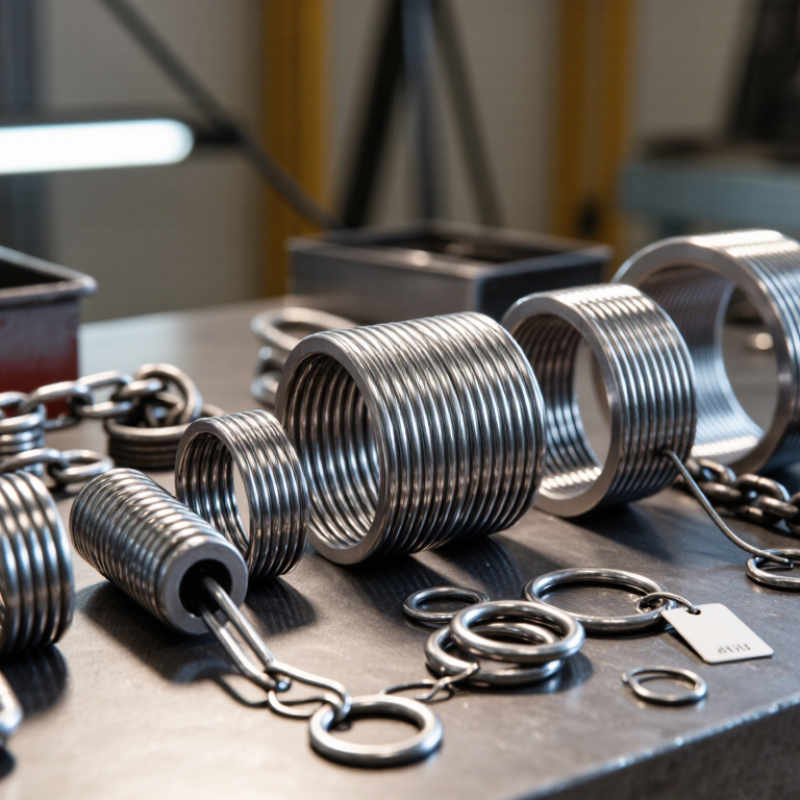
A spring gate ring is a metal connector with a hinged, spring-loaded opening. Press the gate inward, pass it through an attachment point, then release it. The spring closes the gap. Unlike a plain split ring, it allows quicker attachment without twisting an item around the ring. Small, but useful. In workshops, rings can hold identification tags, light tools, cable loops, or removable covers. Their compact shape is handy where a larger connector would snag or obstruct nearby parts.
Materials and construction vary. Stainless steel can resist corrosion in damp settings, while other metals may suit dry, low-wear environments. Check the material, gate movement, finish, and any stated load limit before choosing one. A smooth gate should close fully, without sticking or leaving a visible gap. One detail is easy to miss: a closed gate does not automatically make a ring suitable for lifting or fall protection. Use only hardware specifically rated for those tasks.
The U.S. Bureau of Labor Statistics recorded 5,283 fatal work injuries in its 2023 Census of Fatal Occupational Injuries. That broad workplace figure does not measure spring gate ring performance, but it underscores why small connection points deserve careful selection.
Match the ring to the actual load and environment, then inspect it for bending, corrosion, or a weak spring. Honestly, inspection can feel tedious. It is still better than assuming a tiny connector is sound just because it looks closed.
A Practical Guide to Zinc Alloy Spring Snap Key Rings for Handbag Design
Choosing hardware is an important part of handbag design: it needs to work smoothly while complementing the bag’s shape and finish. A zinc alloy spring snap key ring offers a convenient way to attach keys or small accessories to a handle, interior loop, or decorative tab. Its spring-loaded gate makes attachment and removal simple, while the corrosion-resistant material is suited to everyday use.
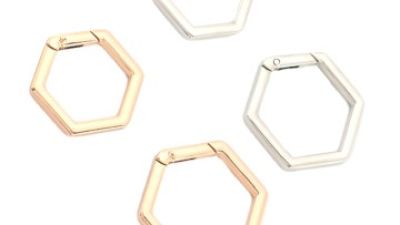
Shape and scale can help the hardware feel intentional rather than purely functional. ThiS Carabiner-style ring draws inspiration from a hexagon, giving it a distinctive look compared with a standard round key ring. Consider how its edges and finish coordinate with the handbag’s structure, stitching, and other metal details. Gold, silver, and black provide versatile options, and custom colors can be requested to suit a particular design palette.
The inner diameter is another practical detail. Sizes of 18mm, 25mm, and 31mm accommodate different keychain dimensions and attachment points. A smaller ring can suit a compact handbag or a neat, understated accent, while a larger diameter may be easier to use with thicker loops or multiple keys. Matching the size to the bag’s intended function helps balance ease of use with a polished appearance.
It is a metal connector with a hinged, spring-loaded gate. Press the gate inward to attach it, then release it to close.
They can connect identification tags, key sets, light tools, cable loops, and removable covers. Small, but useful.
A spring gate ring opens with finger pressure, so attachment is quicker. Split rings can be fiddly, especially when someone wears gloves.
Stainless steel may resist corrosion in damp areas. Plated steel may suit dry indoor settings, but check the finish and exposure.
Not unless the hardware is specifically rated for that task. A gate that appears closed does not prove the ring is load-rated.
Match its size and material to the attachment point and environment. Check gate clearance, movement, and any stated load limit.
Look for bending, corrosion, a weak spring, or a gate that sticks or leaves a gap. Uneven closure matters.
The moving gate can wear, collect grit, catch on gloves, or snag nearby cables. A quick trial in the actual workspace can reveal awkward fit.
Spring Gate Rings are versatile fastening components designed to connect, secure, or retain parts while allowing quick access when needed. Their spring-loaded gate opens under pressure and closes automatically, helping create a convenient connection without requiring tools for routine attachment. Depending on the intended use, they may be made from materials such as stainless steel or other durable metals, with designs that balance strength, corrosion resistance, and ease of operation.
In industrial settings, these rings can be used to organize equipment, attach accessories, or connect compatible components. Compared with simple fixed rings, their opening gate can make installation and removal faster and more flexible. When selecting Spring Gate Rings, consider the required load capacity, ring size, gate clearance, material, operating environment, and frequency of use. Choosing a suitable design helps ensure reliable performance and a practical fit for the application.