Get Instant Quote
Leave Your Message
0%

Finding a good quality towel in 2026 isn't just about flipping through supplier spreadsheets and comparing prices. You really need to dig deeper—check out the fiber content, fabric weight, absorbency, durability, finishing quality, and how reliable the delivery is. I’ve seen Towels that look super thick in photos but end up feeling stiff after they’ve been washed a couple of times. Sometimes sampling reveals surprises, so don’t skip that step.

If you’re experienced in procurement, you’ll know it’s smart to ask for pre-production samples and wash them a bunch of times. Keep track of how much they shrink, if the color stays vibrant, how sturdy the edges are, whether they shed lint, and how long they take to dry. For hotel towels, things like cotton type and GSM (grams per square meter) definitely matter, but honestly, they don’t tell the whole story. I remember rejecting a heavy towel once because it dried so slowly due to its dense loops, which ended up costing us more on laundry. That decision actually saved us a lot of money in the long run, even though our initial assessment missed the problem.

Trusting your supplier also means doing your homework—review their factory capabilities, quality control processes, testing reports, and whether they can trace the materials they use. Customer references can be a huge help, too. And before your order ships, it’s worth having independent inspections done to double-check carton counts, dimensions, stitching, labels, and packaging. Always ask if the mill controls every step internally—yarn production, weaving, dyeing, finishing—because passing everything to outside vendors adds uncertainty. Paying close attention to these details really pays off.

And hey, if you’re shopping in 2026, don’t forget to look into recycled fibers, water usage, chemical management, and eco-friendly packaging options. But remember, environmental claims should be backed up with actual documents—not just pretty slogans. Certifications are a nice bonus, but they don’t replace the need for physical testing. To keep things on track, put together a clear spec sheet, approve a sealed sample for reference, and specify acceptable tolerances upfront. No process is perfect, but the key to good sourcing is catching potential issues early, documenting your decisions, and learning from each purchase to do better next time.

How to Source Quality Towels in 2026?

Defining Quality Standards for Towels in 2026

In 2026, towel quality means more than softness or a high price.

Buyers should define measurable standards before contacting suppliers. Start with fiber content, yarn quality, weight, absorbency, and finishing. Combed cotton usually feels smoother and sheds less. However, heavier towels are not always better. A 700 GSM towel may dry slowly in humid bathrooms.

Request samples in several colors and wash them repeatedly. Check absorbency by placing a fixed amount of water on the surface. Record the absorption time.

Inspect the hem, corners, loops, and stitching after each wash. Loose loops often reveal weak production control. Shrinkage should remain within an agreed tolerance, such as three to five percent.

Color should stay stable after washing, rubbing, and exposure to mild cleaning products.

Safety and traceability also define modern quality.

Ask for independent testing of restricted substances, colorfastness, and fiber composition. Production records should identify the yarn, dyeing batch, inspection date, and final quantity. Clear documentation makes complaints easier to investigate.

I once judged a sample mainly by touch and missed excessive lint after washing. That mistake changed my inspection process.

Comfort matters, but performance needs evidence. Suppliers should explain their quality controls without vague promises. Packaging should protect towels from moisture, dust, and compression damage. Even then, quality standards need periodic review because customer habits, washing machines, and environmental expectations continue to change.

Identifying Reliable Towel Suppliers and Manufacturers

Reliable towel sourcing starts with evidence, not attractive catalog photos. Ask each supplier for factory details, monthly capacity, material composition, and recent quality records. Confirm whether production is in-house or subcontracted. That distinction affects control. Request samples in the exact blend, weight, color, and size you plan to order. Then wash them repeatedly. Check absorbency, lint, edge stitching, shrinkage, and colorfastness under ordinary laundering. One soft sample proves very little.

An experienced manufacturer should explain yarn selection, weaving or knitting, dyeing, finishing, and inspection checkpoints clearly. Vague answers deserve caution. Review test reports from independent laboratories when claims involve safety, dyes, or fiber content. Also verify applicable certifications directly through their issuing organizations. Do not accept a cropped certificate or an undated PDF. Speak with the production manager, not only a sales representative. Ask how defects are recorded, corrected, and reported before shipment. Reliable partners welcome specific questions.

Price still matters, but the lowest quotation can hide weak stitching, unstable dye lots, or replacement delays. A small pilot order reveals more than a long promise. Set written tolerances for weight, dimensions, color variation, packaging, and delivery dates. Keep retained samples from every approved batch. One sourcing mistake is assuming a polished audit replaces ongoing communication. Factories change. Staff changes, too. Schedule periodic checks, especially after a new fabric, dye house, or production location appears. Trust should be measured repeatedly.

Comparing Towel Materials, Weaves, and Absorbency

How to Source Quality Towels in 2026?

Material affects feel, drying speed, durability, and price. Combed cotton usually feels smooth because shorter fibers are removed during processing. Long-staple cotton can create stronger yarns, but fiber length alone does not guarantee quality. Bamboo-derived rayon feels soft and absorbs well, yet it may dry more slowly in humid rooms. Recycled fibers can support sustainability goals, although their hand feel varies between suppliers.

Weave changes performance. A tightly woven terry towel often survives frequent washing and commercial use. Higher loops can increase surface area and absorbency, but they may snag more easily. Waffle weaves dry faster and feel lighter. They can be useful in gyms or small bathrooms.

I have found that a heavy towel is not always the most absorbent. Sometimes, it only holds more water after drying.

Ask suppliers for fabric weight, fiber composition, yarn details, and washing test results. A simple sample test helps. Weigh the dry towel, soak it for one minute, then weigh it again. The weight difference estimates water uptake. Rub the surface after several washes. Loose loops and harsh edges reveal weaknesses.

However, one sample can mislead. Humidity, detergent, and water temperature affect results. I would repeat the test before placing a large order. Softness also deserves caution; excessive finishing agents can create an impressive first touch that fades quickly.

Evaluating Certifications, Testing, and Product Safety

How to Source Quality Towels in 2026?

Quality towels should be judged through verified safety evidence, not appearance alone. Request current certificates from suppliers before approving samples. Check the certificate holder, product code, test date, and laboratory details. A credible report should identify the tested towel composition and color. Generic documents are weak evidence.

Testing should cover absorbency, colorfastness, shrinkage, seam strength, pH, and harmful substances. Ask an independent, accredited laboratory to test random production samples. Safety checks may include restricted dyes, formaldehyde, heavy metals, and chemical residues. Keep sealed samples from each shipment for comparison. Small details matter.

Tips: Build a simple compliance file for every towel style. Record fiber content, weight, dimensions, test reports, factory details, and inspection results. Review certificates before they expire. Do not assume one successful sample represents every batch. A certificate can reduce uncertainty, but it cannot remove it. I would also retest darker colors, because they may behave differently after washing. This step costs time, yet skipping it can create larger quality and safety problems later.

Assessing Manufacturing Costs, Minimum Orders, and Lead Times

How to Source Quality Towels in 2026?

Manufacturing cost starts with fiber, not stitching. Textile Exchange’s Materials Market Report 2024 recorded global fiber production at about 124 million tonnes in 2023. Cotton represented roughly one-fifth of output. Cotton quality still varies by staple length, cleanliness, and yarn count. A 600 GSM combed-Cotton Towel may feel premium, but it consumes more material and needs longer drying time. That affects electricity, labor, and packing costs. Ask for a cost breakdown, not only a unit price. Some quotations hide finishing charges.

MOQ is rarely a fixed industry rule. A mill may accept 300 pieces for an existing color, but require 1,000 pieces for custom dyeing. Embroidery, woven labels, and special dimensions usually raise the threshold. Request a sample before negotiating volume. A sample can expose loose loops, uneven hems, or weak colorfastness. I have found that the cheapest sample often creates the most expensive correction.

Lead times need separate milestones: yarn preparation, weaving, dyeing, inspection, and export booking. UNCTAD’s Review of Maritime Transport 2024 states that over 80% of global merchandise trade by volume moves by sea. Port disruption can therefore extend delivery beyond the factory promise. Build a two-week buffer. It may feel excessive. It is not always enough. Confirm production capacity, inspection timing, and shipment terms in writing, then reassess after the first order.

Verifying Samples and Negotiating a Supplier Agreement

A quality towel begins with a controlled sample, not a attractive product photo. Textile Exchange’s Materials Market Report 2024 recorded 124 million tonnes of global fiber production in 2023. That scale makes traceability and consistency essential. Request a pre-production sample in the exact blend, GSM, size, border construction, and dye shade. Wash it at least five times. Record absorbency, lint release, shrinkage, odor, and color transfer. Test both sides.

Measure before and after washing. A 2–5% size change may affect packaging and customer expectations. Check the hem for skipped stitches and loose threads. Use a calibrated scale, not hand judgment, for GSM. For colorfastness and dimensional change, ask an accredited laboratory to follow relevant ISO or AATCC methods. Supplier test sheets help, but independent verification is stronger. Numbers can still mislead.

Negotiation should convert the approved sample into a written supplier agreement. Attach a sealed “golden sample” and define tolerances for GSM, size, shade, absorbency, defects, packing, and shipment timing. Reference ISO 2859-1 when setting an inspection plan and acceptable quality limits. Textile Exchange projects global fiber production could reach 160 million tonnes by 2030, increasing pressure on reliable sourcing. Avoid vague promises. Specify remedies, inspection rights, replacement terms, and payment stages. My checklist is not perfect. Small omissions, especially around shrinkage, can become expensive disputes.

How to Source Quality Towels in 2026?

Sample verification and supplier-agreement negotiation should convert measurable quality requirements into clear acceptance thresholds.

Reading the chart: The sample score represents a practical pre-contract evaluation across fabric weight, shrinkage, colorfastness, absorbency, stitching, and packaging. A score of 90% or higher is used as the negotiation baseline. Suppliers should provide test records, agree to inspection rights, and define corrective actions for results below the threshold.

How Quick-Dry Luxury Cotton Towels with Embroidered Logos Elevate Everyday Comfort and Brand Style

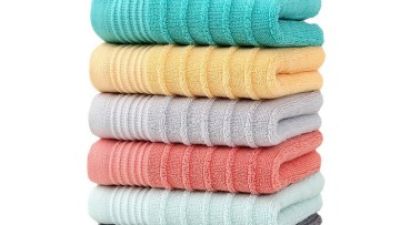
Quick-dry luxury cotton towels bring a refined sense of comfort to everyday routines. Made from high-quality pure cotton yarn, this soft towel feels gentle against the skin and is suitable for all skin types. Its high-density weave creates a strong, durable structure that is resistant to shedding and fading, while the excellent water absorption helps it quickly soak up moisture after bathing, washing hands, or exercising. Measuring 72 × 33 cm and weighing 98 g, it offers a practical balance of coverage, lightness, and easy handling. With a GSM of 410, the towel provides a pleasantly substantial feel without becoming overly heavy, and it dries efficiently after use.

An embroidered logo adds a distinctive textured finish that elevates the towel from a daily necessity to a polished lifestyle detail. The precise embroidery remains visually appealing while helping create a more consistent and recognizable presentation across guest rooms, spas, fitness spaces, hospitality settings, and thoughtful gifting. Combined with the towel’s soft touch, dependable durability, and quick-drying performance, this customized detail enhances the overall user experience and communicates a sense of care, quality, and elevated brand style.

FAQS

What defines a quality towel in 2026?

Quality includes fiber content, yarn strength, GSM, absorbency, shrinkage, colorfastness, stitching, and traceability. Softness alone is not enough. Evidence matters.

Is a heavier towel always better?

No. A 700 GSM towel may feel luxurious but dry slowly in a humid bathroom. Consider drying time, electricity, and customer habits.

How should towel samples be tested?

Request the exact blend, size, GSM, border, and color. Wash each sample at least five times. Record absorbency, lint, odor, shrinkage, and color transfer.

What physical details should buyers inspect?

Check the hem, corners, loops, and stitching after every wash. Loose loops can expose weak production control. Use a calibrated scale for GSM.

How much shrinkage is acceptable?

Agree on a clear tolerance, often around two to five percent. Measure length and width before and after washing. Small changes can affect packaging.

How can buyers assess manufacturing costs?

Request a breakdown covering fiber, yarn, weaving, dyeing, finishing, inspection, packing, and transport. A low unit price may hide finishing charges.

How do minimum order quantities usually work?

Existing colors may require fewer pieces, while custom dyeing often needs larger quantities. Embroidery, labels, and special sizes can raise the threshold.

How should buyers manage towel delivery times?

Separate the schedule into yarn preparation, weaving, dyeing, inspection, and shipment. Add a two-week buffer for transport delays. It may still be insufficient.

What should a supplier agreement include?

Attach an approved sample and define tolerances for GSM, size, shade, defects, packing, and delivery. Include inspection rights, replacement terms, and payment stages.

What mistake can buyers make during quality checks?

Touching a sample may create false confidence. I once missed excessive lint after washing. My process improved, but it is still not perfect.

Conclusion

Sourcing quality towels in 2026 requires a clear, systematic approach that balances performance, safety, cost, and supply reliability. Buyers should first define quality standards for softness, durability, absorbency, colorfastness, stitching, and shrinkage based on the intended use. Comparing materials such as cotton, bamboo blends, and recycled fibers, along with different weaves and fabric weights, can help identify the best balance between comfort and functionality. A reliable Towel supplier should demonstrate consistent production capabilities, transparent communication, suitable manufacturing facilities, and a proven ability to meet agreed specifications.

Before placing an order, buyers should review relevant certifications, testing procedures, and product safety documentation. Manufacturing costs, minimum order quantities, production capacity, packaging requirements, and lead times should be evaluated carefully to avoid unexpected delays or expenses. Finally, requesting samples and conducting practical tests for absorbency, washing performance, color stability, and construction quality is essential. Clear negotiation of pricing, quality standards, inspection procedures, delivery terms, payment conditions, and remedies for defects will create a stronger and more dependable supplier agreement.


Ethan

Ethan

Ethan is a dedicated marketing professional at Shenzhen Yiyixing Zipper Manufacturing Co., Ltd., where he leverages his extensive knowledge of the zipper industry to promote the company's exceptional products. With a keen understanding of market trends and consumer needs, Ethan plays a pivotal role......
Previous Top Cat Leash Manufacturers for Global Buyers