- Home
- Products
- About Us
- News
- Video
- Contact Us
Get Instant Quote
Leave Your Message
- Phone
- E-mail
- Whatsapp
- Wechat+8617875041119

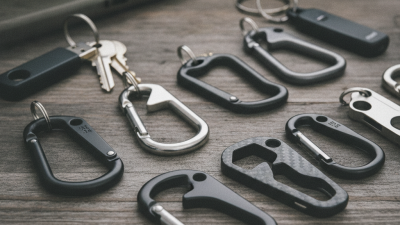
Picking a Carbiner Keychain supplier for bulk orders? It's not just about who has the lowest unit price. A solid choice has to tie together product quality, production capacity, communication, and documented compliance. Grand View Research says the global promotional products market keeps growing, mostly because brands want visibility and customized merch. That growth gives you more suppliers to choose from, sure, but it also means quality can vary a lot more than you'd expect.
The PPAI Consumer Study points out that useful promo items can boost brand recall and keep people engaging with them day to day. Think about it: a Carbiner Keychain might hang off a backpack, a toolbox, or an Event Lanyard for months. So the spring gate, alloy thickness, surface finish, and logo durability all deserve a close look. Small details really do matter. A supplier should be able to give you pre-production samples, material specs, logo proofs, and clear packaging info. And ask whether the sample actually matches the final bulk production process. Honestly? It often doesn't.
Then there's the ASI Ad Impressions Study, which shows how much long-term visibility promotional products can have. But impressions only count if the product still works and looks decent. So review the supplier's factory experience, inspection procedures, lead times, and replacement policy. Ask for recent quality records, relevant test reports, and references from similar buyers. ISO 9001 can be a good sign of process discipline, though certification alone doesn't guarantee perfect results. No supplier scorecard is ever perfect. That's why buyers should compare samples, audit responses, and total landed cost side by side. The best partner isn't always the cheapest. It's the one that can keep delivering consistent Carbiner Keychain products at the spec you agreed on.
Choosing a Carabiner Keychain Supplier for Bulk Orders
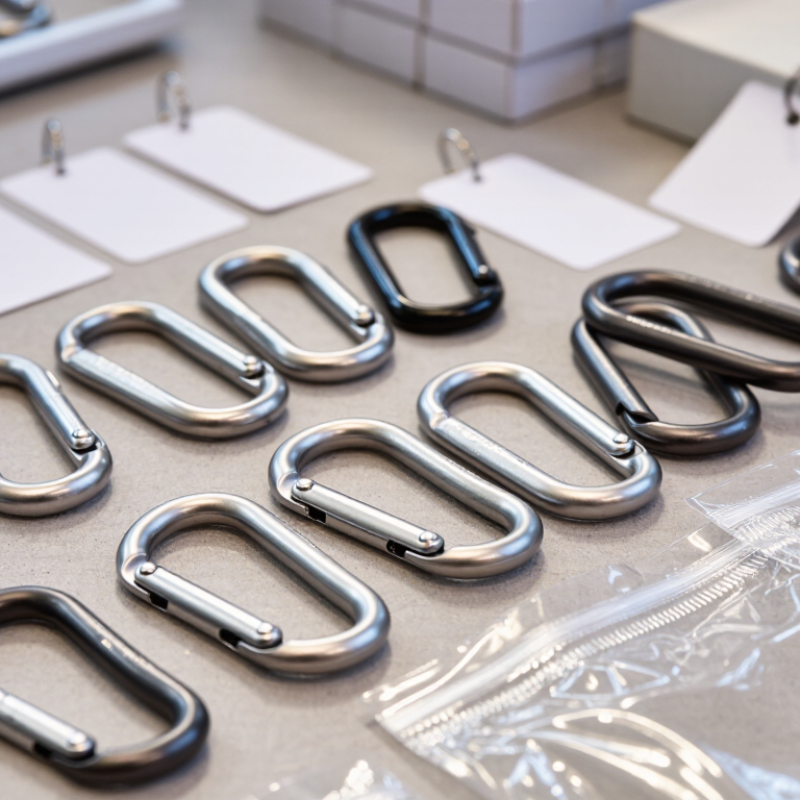
Define your order before contacting suppliers. Record the required quantity, dimensions, metal type, finish, color, and packaging method. A simple specification sheet prevents expensive misunderstandings. Include acceptable size tolerances, logo placement, and attachment details. For example, state whether the keychain needs a 60-millimeter body and a matte black finish. Clarify whether it is decorative or intended for holding keys. It must not be presented as climbing or load-bearing equipment without appropriate certification.
Ask for a physical sample before approving mass production. Check the spring action, gate alignment, surface scratches, and connection strength by hand. Request material information and relevant quality inspection records. Confirm the minimum order quantity, production schedule, replacement policy, and inspection process in writing. My early mistake was focusing on unit price. The cheapest quote created more sorting work later.
Tips: Use a comparison table. List every specification. Ask suppliers to repeat your requirements in their quotation. Confirm whether samples match final production materials. A small sample fee may prevent a large inventory problem. Also, define an acceptable defect rate before production starts. Numbers are clearer than vague promises. Recheck the packaging dimensions, too. Small changes can affect shipping costs.
| Requirement Dimension | Recommended Specification for Bulk Orders | Why It Matters | Supplier Verification Point |
|---|---|---|---|
| Order Quantity | Define the total quantity, delivery schedule, and whether the order will be placed as one shipment or in multiple releases. | Quantity affects unit pricing, production planning, packaging, and available customization options. | Request the minimum order quantity, price breaks, production capacity, and split-shipment terms in writing. |
| Base Material | Use aluminum alloy for lightweight promotional keychains, or stainless steel for greater abrasion and corrosion resistance. | Material influences weight, durability, appearance, cost, and resistance to oxidation. | Confirm the material grade or alloy designation and request a material declaration or inspection report. |
| Overall Size | Specify the exact length, width, thickness, and opening dimensions; a common compact keychain format is approximately 50–80 mm long. | Dimensions determine portability, compatibility with keys or accessories, packaging space, and perceived value. | Approve a dimensioned technical drawing and define acceptable dimensional tolerances before production. |
| Form and Profile | Choose a standard D-shape, oval, or custom silhouette with rounded edges and no sharp burrs. | The profile affects usability, hand comfort, visual appearance, and the available printable area. | Check the approved sample for edge finishing, symmetry, gate alignment, and smooth operation. |
| Gate Mechanism | Select a spring-loaded gate for quick attachment and specify the required opening width and return action. | Gate consistency affects attachment security, ease of use, and product life. | Require repeated opening-and-closing checks and reject units with sticking, excessive play, or incomplete closure. |
| Intended Use | Classify the item as a keychain or accessory clip unless it is specifically engineered and certified for climbing, lifting, fall protection, or other load-bearing applications. | Decorative keychain carabiners are not automatically suitable for safety-critical or load-bearing use. | Require clear product labeling and written confirmation of the permitted use and limitations. |
| Load and Performance Requirements | Define a non-load-bearing performance requirement for ordinary keychain use, or provide a documented test method if a specific force requirement is necessary. | A stated test method prevents misleading comparisons between decorative clips and certified climbing hardware. | Request test conditions, sample size, failure criteria, and test records; do not rely on an unsupported load-rating claim. |
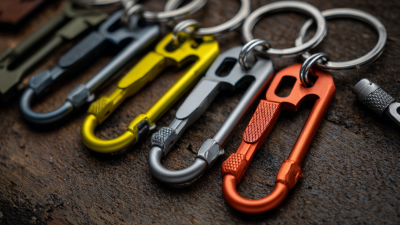
| Surface Finish | Choose anodized aluminum, painted coating, polished metal, or another finish according to the desired appearance and wear resistance. | Finish affects color consistency, scratch resistance, corrosion resistance, and overall presentation. | Approve a physical color standard and specify acceptable limits for scratches, stains, coating gaps, and color variation. |
| Logo and Decoration | Define the decoration method, artwork format, logo position, maximum imprint area, and color references before sampling. | Decoration requirements influence tooling, setup cost, production time, and visual consistency. | Approve a pre-production sample and confirm artwork ownership, print durability, and color-matching expectations. |
| Packaging | Specify individual bags, cards, boxes, or bulk cartons, including barcode, warning text, carton quantity, and shipping marks. | Packaging protects the finish and ensures compatibility with warehouse and retail handling systems. | Confirm packaging dimensions, packing method, gross weight, carton size, and drop-protection requirements. |
| Sampling and Approval | Request a pre-production sample that matches the final material, finish, decoration, hardware, and packaging. | A production-representative sample reduces the risk of receiving goods that differ from the quotation or prototype. | Use a signed sample or approved reference photos as the quality benchmark for mass production. |
| Quality Inspection | Set inspection criteria for dimensions, surface finish, gate function, decoration, quantity, and packaging condition. | Defined acceptance criteria make quality decisions measurable and consistent. | Agree on an inspection plan, defect classification, sampling level, corrective-action process, and inspection timing. |
| Lead Time and Delivery | Separate sample lead time, tooling time, production time, inspection time, and transportation time in the order schedule. | A complete timeline helps prevent missed launch dates and unexpected inventory gaps. | Confirm the production start trigger, estimated completion date, shipping terms, delivery destination, and delay procedure. |
Note: Specifications should be finalized through an approved drawing, physical sample, written quality standard, and a clear statement that the product is intended for keychain or accessory use unless separately certified for another application.
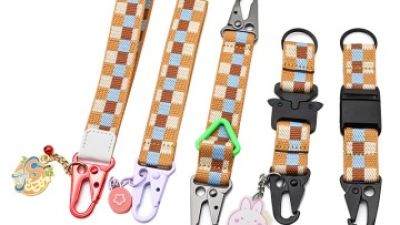
A short nylon keychain wristlet is a practical accessory for keeping keys, cards, or small essentials close at hand. Nylon straps are woven into a distinctive plaid pattern, offering a textured appearance and dependable everyday flexibility. Their compact wristlet design makes them convenient for commuting, shopping, traveling, or organizing keys inside a larger bag. When choosing one, consider the strap width, length, stitching quality, and whether the attachment hardware matches your daily needs.
Different styles can be paired with useful accessories, including an HK Sling Hook, Snap Hook Key Ring, Flog Clip, or Magnetic Buckle. Metal components may also be customized in color through electroplating, spray painting, or roller plating, allowing the wristlet to coordinate with different design themes. Decorative pendants made from metal, silicon, or acrylic can add personality while maintaining a lightweight feel. Select a clasp that is easy to operate and secure enough for the items you plan to carry.
For brighter, more decorative options, polyester straps feature heat-transfer patterns with vivid colors and layered details. These printed designs are suitable for playful, seasonal, or personalized styles and are designed to resist fading during regular use. Comparing material, hardware, pattern, and customization options can help you find a keychain wristlet that balances appearance, convenience, and durability.
Ask for monthly output, active production lines, staffing, and lead times. Request a capacity plan for your exact design. It should include raw material availability and inspection points. Numbers matter. A supplier making basic clips may struggle with engraving or accessories.
Request incoming metal inspection records and dimensional check results. Also review surface-finish and final packaging controls. Each production lot should show sample size, defect types, and corrective actions. Small details matter. Ask how rejected pieces are separated from acceptable goods.
Test gate movement, spring return, coating adhesion, and pull resistance. Choose tests according to the product’s intended use. Compare production results with an approved reference sample. One report is not enough. Consistency matters more than a perfect sample.
Yes, especially for large orders or customized designs. Inspect several cartons when possible. Compare colors, logos, finishes, quantities, and packaging. Early samples can look better than the average batch. That risk remains.
Check the certificate holder, issuing body, validity dates, and covered factory. Confirm that the documents apply to your exact order. Request original files, not logo images. Verify them through the issuer’s public channel. Be skeptical.
Judge landed cost, not the unit quote alone. Ask for separate prices for products, setup, packaging, inspection, freight, and import charges. A quoted item price may rise sharply after these additions. Request tiers for 500, 2,000, and 10,000 pieces. The final number matters.
Compare tooling fees, setup costs, storage needs, and expected demand. A very small order may carry higher preparation costs. A large minimum may create excess inventory. Order a paid sample before approving mass production. One failed sample can expose rework risks.
Use written milestones linked to sampling, production, and inspection. For example, pay a deposit and the balance after inspection. Include delay handling, refunds, and shortages in the agreement. Confirm bank details through an independent channel. Do not trust sudden email changes.
Choosing the right Carbiner Keychain supplier for a bulk order begins with clearly defining your requirements, including quantity, dimensions, materials, colors, functions, packaging, and intended use. Compare suppliers based on material durability, design options, and customization capabilities to ensure the finished product matches your expectations. It is also important to evaluate their manufacturing capacity, quality control procedures, and relevant certifications, as these factors can affect consistency and product reliability.
Before making a decision, review pricing, minimum order quantities, payment terms, and any additional customization or packaging costs. Request samples to inspect quality and confirm that production timelines meet your schedule. Discuss shipping methods, delivery arrangements, and responsibility for any potential delays. Finally, assess the supplier’s communication, responsiveness, reliability, and after-sales support. A supplier that provides clear information, maintains stable quality, and handles concerns professionally is more likely to support a smooth and successful bulk purchasing experience.