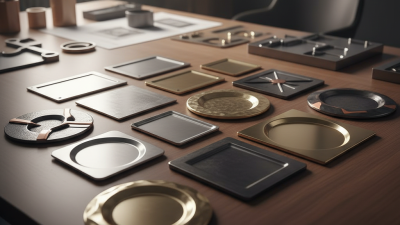
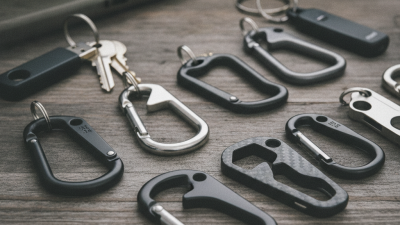
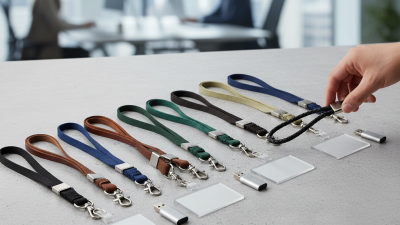
Choosing the best Metal Logo Plate manufacturer in China isn’t just about comparing prices per unit. You’ve really gotta think about whether the plate can handle a bit of rough treatment—like being handled, exposed to moisture, cleaned, and inspected multiple times. The surface shouldn’t be sharp or uneven; it should feel smooth and precise. Those tiny details matter a lot, especially when you're dealing with high-end equipment, vehicles, electronics, or retail packaging.
Industry reports back this up too. According to Grand View Research, the metal stamping market is huge worldwide, mainly driven by sectors like automotive, electronics, and industry. Meanwhile, Fortune Business Insights points out that this field is steadily growing thanks to automation and the increasing demand for spot-on components. Keep in mind, though, these reports don’t cover every single Metal Logo Plate order—that’s worth noting. Still, they highlight why having stable tooling, controlled finishing processes, and reliable inspections are crucial.
W. Edwards Deming, a legendary figure in manufacturing quality, once said, ‘Quality comes not from inspection, but from improving the production process.’ And honestly, that’s right on the mark when it comes to logo plates. A good supplier should be upfront about material types, thickness tolerances, adhesive options, plating techniques, and color controls. Don’t just go on pictures—ask for physical samples, check the edges under good light, and test the adhesive on the surface you’ll be using. Sounds simple, but it really is.
Sometimes, buyers jump to conclusions based purely on photos, which can be a costly mistake. A responsible manufacturer should be ready to share clear drawings, actual samples, inspection records, and packaging info that makes sense. Following standards like ISO 9001 can help ensure consistent quality, and documentation for things like RoHS or REACH can support international compliance. The thing is, the cheapest quote isn’t always the best choice. What really counts is finding a supplier who can produce consistently, communicate openly, and provide solid proof of quality—that’s what makes all the difference.
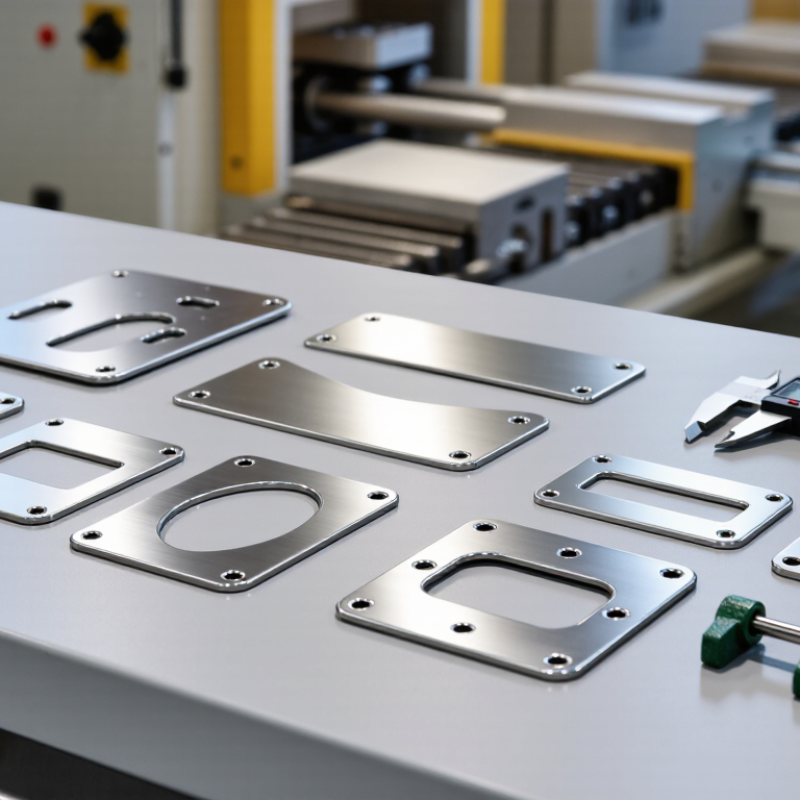
A metal logo plate is a thin, shaped panel that displays a company mark, product name, model number, or warning detail. It is commonly made from anodized aluminium, stainless steel, brass, or plated zinc. Manufacturers attach these plates to equipment, vehicles, cabinets, furniture, and packaging with adhesive, rivets, screws, or recessed mounting.
Material choice controls performance. Anodized aluminium suits indoor equipment and moderate outdoor exposure because its oxide layer resists wear and corrosion. Stainless steel offers stronger resistance in humid, industrial, or frequently cleaned environments. The International Aluminium Institute reports that nearly 75% of all aluminium ever produced remains in use, supporting its long service value. The U.S. Environmental Protection Agency also states that recycling aluminium saves about 95% of the energy required for primary production.
Design details matter. A supplier should check logo size, plate thickness, edge safety, surface texture, colour stability, and attachment conditions. Outdoor plates may need UV-resistant inks, sealed surfaces, and salt-spray testing. Small details fail first. A weak adhesive can ruin excellent printing.
In practical production, samples should be tested on the actual mounting surface. Heat, moisture, vibration, and cleaning chemicals can change results. A perfect finish is not always the best choice. Sometimes, a simpler engraved surface lasts longer than decorative printing. ISO 9227 salt-spray testing can help compare corrosion resistance, but laboratory results cannot fully represent every installation. Human inspection still matters.
China’s metal logo plate manufacturers commonly work with aluminum, stainless steel, brass, copper, and zinc alloy. Aluminum is lightweight and supports anodizing, brushing, polishing, and color coating. Stainless steel offers stronger corrosion resistance and a clean, modern surface. Brass and copper create a warmer, premium appearance, especially after polishing or antique treatment. Zinc alloy suits raised logos with detailed shapes, although it usually feels heavier.
Common finishes include mirror polish, satin, brushed lines, sandblasting, anodizing, electroplating, and matte painting. Brushed aluminum can show fine directional marks under light. Polished stainless steel reflects nearby objects clearly. Antique brass may vary slightly between production batches. That is normal, but it should be controlled with approved samples. In practical sourcing, surface samples often reveal more than digital drawings. Small differences matter.
Tips: Ask for a physical sample before mass production. Confirm metal thickness, finish code, adhesive type, and color tolerance. Check the logo under both warm and cool lighting. Test the plate on the actual product surface. Adhesive performance can change with dust, curves, heat, or rough coatings. I have seen attractive samples fail because the backing was chosen too quickly. A supplier should explain these limitations clearly, not promise perfection.
Designing a custom metal logo plate starts with a practical drawing, not only a decorative image. The artwork becomes vector paths for checking line width, corner radius, hole position, and text clarity. Anodized aluminum suits lightweight panels. Stainless steel withstands abrasion and outdoor exposure. Brass offers warmer visual depth. The World Steel Association reported 1.89 billion tonnes of crude steel production in 2023, but large supply volumes cannot replace correct alloy selection.
Manufacturing may combine stamping, etching, laser marking, CNC cutting, or chemical engraving. Embossed details require controlled depth and smooth radii. A shallow mark may disappear after coating. A deep mark may distort thin sheet. Surface finishing can include brushing, polishing, anodizing, plating, or clear protection. Adhesive backing must match temperature, moisture, surface energy, and removal requirements. This detail is often underestimated.
A dependable supplier should provide a digital proof, material certificate, color reference, and dimensional inspection record. The ISO Survey 2022 reported 1,265,216 ISO 9001 certificates across 185 countries and economies, showing the broad role of quality systems. Yet certification alone is not enough. Dust, burrs, and slight color shifts still occur in real workshops. The first proof is rarely perfect. Testing one plate on the actual product can reveal installation problems before mass production begins.
| Production Stage | Typical Materials and Design Inputs | Common Manufacturing Methods | Quality and Engineering Checks | Typical Output |
|---|---|---|---|---|
| 1. Artwork and Specification Review | Vector artwork such as AI, EPS, SVG, or PDF; required dimensions; mounting method; surface finish; color references; and application environment. | Artwork is converted into production-ready layers for lettering, recessed areas, raised details, cut lines, and mounting features. | Check logo proportions, minimum line widths, corner radii, readable text size, plate thickness, and available production area. | Approved technical drawing or digital proof. |
| 2. Material Selection | Aluminum 5052 for lightweight corrosion resistance; stainless steel 304 for strength and general corrosion resistance; brass for a warm metallic appearance. | Material is selected according to appearance, indoor or outdoor exposure, weight requirements, forming needs, and budget. | Verify material grade, sheet thickness, surface condition, and compatibility with the intended adhesive or fastener. | Material specification and approved blank thickness. |
| 3. Cutting and Blank Preparation | Flat metal sheet or coil stock prepared to the required plate outline, including rectangular, round, oval, custom, or die-cut shapes. | Laser cutting, CNC routing, stamping, or shearing may be used. Stamping is suitable for repeat production with dedicated tooling. | Inspect outer dimensions, hole positions, edge condition, burrs, and flatness. Deburring is required where sharp edges are present. | Clean metal blanks ready for surface and logo processing. |
| 4. Surface Preparation | Brushed, polished, mirror, sandblasted, satin, or plain mill-finish surfaces, depending on the desired visual effect. | Mechanical brushing, polishing, bead blasting, grinding, or chemical cleaning removes contaminants and creates the specified texture. | Check uniformity of grain direction, reflectivity, visible scratches, stains, dents, and surface contamination. | Prepared decorative surface with a consistent appearance. |
| 5. Logo Formation | Raised or recessed artwork, engraved lines, etched details, through-cut lettering, or embossed shapes. | CNC engraving, laser marking, chemical etching, embossing, debossing, or precision stamping is selected according to the design and volume. | Verify logo position, depth or relief, line definition, letter legibility, registration, and consistency across the plate. | Metal plate with accurately formed logo details. |
| 6. Color and Protective Finishing | Anodized aluminum, painted or filled recessed areas, printed graphics, electroplated finishes, or clear protective coatings. | Common processes include anodizing, powder coating, liquid coating, screen printing, digital printing, and selective color filling. | Check color consistency, adhesion, coverage, surface cleanliness, coating defects, and resistance requirements appropriate to the application. | Finished logo plate with the specified color and protection. |
| 7. Mounting Feature Installation | Pressure-sensitive adhesive, countersunk holes, through-holes, studs, clips, rivets, or magnetic mounting systems. | Adhesive backing is laminated; holes are drilled or punched; studs, clips, or other hardware are installed when specified. | Confirm hole diameter and spacing, hardware alignment, adhesive coverage, liner condition, and safe handling of sharp features. | Plate prepared for direct application or mechanical fastening. |
| 8. Final Inspection and Packing | Approved drawing, purchase specifications, sample standard, packaging requirements, and quantity record. | Products are visually inspected, dimensionally checked, cleaned, separated with protective material, and packed to reduce scratching. | Confirm quantity, dimensions, artwork, finish, mounting components, packaging integrity, and traceability documentation. | Inspection-approved custom metal logo plates ready for shipment. |
Note: Actual material grades, thicknesses, finishes, tolerances, testing requirements, and production methods should be confirmed in the approved technical drawing and application specifications.
A reliable Chinese metal logo plate supplier proves control through details, not attractive photographs. The 2023 ISO Survey recorded more than one million ISO 9001 certificates worldwide, but certification alone cannot guarantee stable production. Ask for recent audit records, material certificates, and a clear corrective-action process.
Experienced suppliers measure alloy thickness, adhesive strength, color tolerance, and edge safety during production. For outdoor plates, request corrosion testing under ASTM B117 conditions. However, salt-spray hours can mislead when real weather exposure differs. A supplier should explain test limits instead of promising perfect durability. The World Bank’s 2023 Logistics Performance Index gave China a score of 3.7 out of 5, showing strong logistics capacity, but transport performance still varies by region and factory discipline. Production evidence matters more than location.
Tips: Request a pre-production sample with your actual artwork. Check lettering under angled light. Confirm the metal grade, thickness, finish, packaging, inspection method, and replacement terms in writing. A simple inspection sheet prevents expensive misunderstandings. Ask for batch photos and measurement records before shipment. Do not rely on a polished showroom sample. A low price still attracts me, even when experience says pause. That hesitation is useful. A dependable supplier welcomes questions, admits process limits, and improves after a failed sample.
A reliable supplier should understand material selection, finish requirements, durability, and application conditions. The chart compares the approximate room-temperature density of commonly used metal logo plate materials, based on standard engineering reference values. Density is useful for evaluating weight, rigidity, and material consistency.
Key takeaway: Aluminum is lightweight and suitable for applications where low weight matters, while stainless steel, brass, and zinc provide greater mass and a more substantial feel. Before placing an order, request material certificates, finish samples, dimensional inspection records, and production quality documentation.
Choosing a metal logo plate supplier in China requires more than comparing catalog photos. Buyers should request a physical sample before approving mass production. Inspect the plate under direct light. Check edge smoothness, lettering depth, color consistency, and surface resistance.
Material details matter. Ask whether the plate uses aluminum, stainless steel, zinc alloy, or another specified metal. Confirm thickness, coating type, adhesive grade, and tolerance ranges in writing. A supplier should provide production drawings and inspection records. Small defects can become obvious on a retail package. I once accepted a sample with slightly uneven edges. It looked acceptable alone, but failed beside finished products.
Pricing should be separated into tooling, unit cost, printing, finishing, packaging, and shipping. The lowest quote may exclude mold charges or inspection work. Compare identical specifications, not attractive totals. Ask about minimum order quantities and price changes at different volumes. A clear quotation is a useful sign of professional communication.
Delivery evaluation needs realistic milestones. Confirm sample time, production time, inspection time, and estimated transit time. Request photos before shipment and use protective packaging for polished surfaces. Leave room for delays. This is often overlooked. A dependable supplier explains what happens when specifications change or production needs correction. That response can reveal more than a polished sales presentation.
Custom metal logo plates appear across many industries where durable identification and visual presentation matter. Industrial machinery uses them on control cabinets, pumps, compressors, and production tools. A brushed aluminum plate can show a company mark, model number, voltage details, or service information. These plates must tolerate oil, dust, vibration, and repeated cleaning.
The electronics industry often applies small plates to enclosures, power units, and professional equipment. Fine etching keeps narrow text readable without adding much weight. Automotive and transportation manufacturers use metal plates on interior panels, control modules, and specialty components. Furniture makers also add plates to desks, cabinets, lighting fixtures, and premium hardware. The plate becomes part of the product’s identity.
Medical equipment, laboratory instruments, and commercial appliances require careful surface control. Clean edges, stable adhesives, and readable markings support safer maintenance and inspection. Experienced suppliers usually check artwork, metal thickness, adhesive selection, color accuracy, and batch consistency before production. Samples help reveal problems early.
Small details matter.
A logo plate may look simple, but poor corner finishing can cause damage during installation. Adhesive performance may also change with heat, moisture, or textured surfaces. I have found that customers sometimes focus on appearance first and testing later. That order can create avoidable rework. A reliable manufacturer should discuss the actual environment, cleaning method, mounting surface, and expected service life before recommending aluminum, stainless steel, brass, or another suitable material.
Customizable Magnetic Beer Bottle Openers: A Practical Branded Gift from a Trusted Manufacturer
Promotional products remain an effective way to keep a business visible in everyday life. According to the Promotional Products Association International (PPAI) consumer study, 83% of recipients enjoy receiving promotional products, while many continue using items that offer practical value. A customizable magnetic beer bottle opener fits this preference by combining utility, visual appeal, and repeated brand exposure in one compact gift.
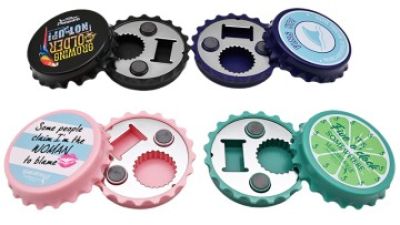
Designed in a round shape inspired by a classic beer bottle cap, the opener features a durable ABS shell and a smooth UV-printed surface. Full-color printing supports logos, text, and creative patterns, helping businesses present a memorable image for events, hospitality programs, retail promotions, and customer appreciation campaigns. Its nostalgic appearance also makes it suitable for beverage-themed marketing without looking ordinary or disposable.
Inside, the metal lining provides two opening methods: a cap-shaped design for twisting and a grooved rectangular design for lifting caps from below. Two integrated magnetic points allow the opener to attach securely to a refrigerator, keeping it convenient for regular use. The Advertising Specialty Institute’s promotional products research has shown that useful branded items can generate repeated impressions over an extended period, making this customizable opener a practical choice for manufacturers, distributors, and organizations seeking a functional gift with strong visibility.
It displays a company mark, product name, model number, or warning detail. Common uses include equipment, vehicles, cabinets, furniture, and packaging.
Common choices include anodized aluminium, stainless steel, brass, and plated zinc. Aluminium is lightweight. Stainless steel suits humid or frequently cleaned areas.
Consider moisture, heat, vibration, cleaning chemicals, and outdoor exposure. Anodized aluminium suits moderate conditions. Stainless steel offers stronger corrosion resistance.
Check plate thickness, logo size, edge smoothness, surface texture, and colour stability. Also confirm ink durability and mounting space. Small edges can fail first.
Request a physical sample using the actual artwork and mounting surface. Inspect it under direct and angled light. Test adhesive strength, lettering depth, and surface resistance.
Separate tooling, unit cost, printing, finishing, packaging, and shipping. Compare identical specifications. A low quote may exclude important charges.
Confirm sample time, production time, inspection time, and estimated transit time. Request shipment photos and protective packaging for polished surfaces. Leave buffer time.
Look for material certificates, measurement records, audit evidence, and corrective-action procedures. Ask about replacement terms in writing. Honest limits matter.
No. Salt-spray testing helps compare samples, but real weather can behave differently. Actual exposure, installation quality, and cleaning habits still matter. Testing is not certainty.
A Metal Logo Plate is a durable identification and decoration component used to display a company name, product mark, model information, or decorative design. In China, buyers can choose from materials such as aluminum, stainless steel, brass, zinc alloy, and other suitable metals, with finishes including brushing, polishing, anodizing, plating, painting, embossing, and laser engraving. The design and manufacturing process generally includes artwork preparation, material selection, forming or engraving, surface treatment, quality inspection, and packaging.
A reliable Chinese supplier should offer clear communication, professional design support, stable production capabilities, consistent quality control, and flexible customization options. Buyers should compare material specifications, logo accuracy, surface durability, minimum order quantities, unit pricing, sample approval procedures, production schedules, and delivery terms before placing an order. Custom metal logo plates are commonly used in electronics, appliances, furniture, machinery, vehicles, tools, packaging, and many other industries that require a professional and long-lasting product identity.